Pages

Sunday, July 22, 2012

Summer Holiday Part 6

The next morning started with a hearty breakfast at the hotel, and then a 15 minute drive to what was to us the hero of this region- the Bayeux Tapestry, located in Bayeux.  The 1000 year old, 70m long tapestry, which tells the story of William the Conqueror and the Battle of Hastings in 1066, was presented beautifully and accompanied by an very informative audio guide.  This visit piqued my interest in the history of England and the Normans which is not an area I've ever looked into much before.  A brief walk through the medieval festival, which just happened to be in town that weekend, and a bite to eat under the shadow of the Bayeux Cathedral's ornate spires really made this history come alive.
Bayeux Tapestry
Bayeux backstreets
Medieval fair in front of the cathedral
Lunch at the cathedral
A supposedly 5 minute walk (it was closer to 20 minutes) from the centre of town was the Museum of the Battle of Normandy.  This was a well presented and very informative museum based on the allied D-Day invasion of Normandy in WWII.  It had displays on some of the different aspects of war than just the front-line fighting, such as the changing tactics between WW1 and 2, the impact of technology, psychological warfare techniques (such as air-dropping thousands of leaflets containing misleading and depressing information over enemy troops in the field), and journalism in the war. The in-house WWII documentary movie was very good to watch also.  The mass of information meant we were all a little fatigued before we could get through all the displays, but it was definitely a good museum to visit.
One of the dioramas at the Normandy museum at Bayeux
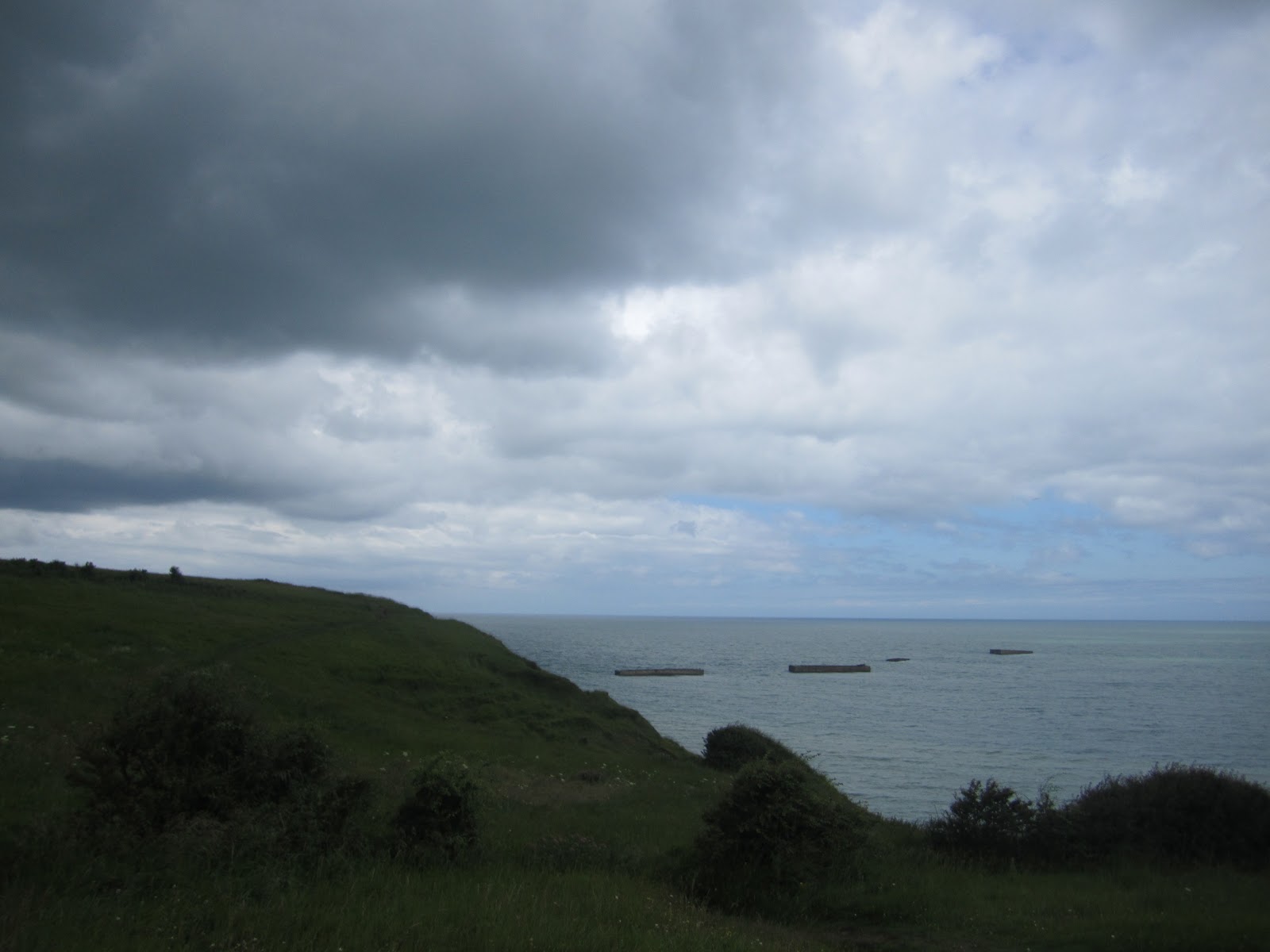
The afternoon was spent driving along the coastline, visiting the various beaches and historic sites from the D-Day landings.  We walked along the cliffs at Gold Beach where we spotted some large concrete structures that we believe were part of the artificial harbour/offshore dock built by the Allied troops as a base for their naval crafts.  We had a quick walk Omaha Beach, one of the more well known due to its presence in many WW2 first-person shooter computer games, and the most outstanding thing was how it was not outstanding in any way- it was just a normal beach, with not really any sign of the events that happened here 50 years ago.
Ominous sky over the Atlantic Wall near Gold Beach
Concrete structures remaining from the war

Further along the coast between Omaha and Utah was Pointe du Hoc, a fortified German position that was taken by American Rangers during WWII.  There was an American memorial here, and the preserved fortifications and craters were very interesting to see.
Battle scarred Pointe du Hoc
Bullet-riddled entrance of one of the bunkers
That evening we had dinner at a restaurant at the dock area again.  It was not the greatest restaurant- we decided that the only reason it stays in business is that almost all the others are closed on a Sunday night- but I had mussels again, an even bigger pot than the previous night, and I was quite satisfied.  We finished off the day with a walk along the jetty, and then we wandered through the back streets back to our hotel, where we saw the most beautiful sunset over the hills.  Unfortunately the only entrance on that side of the hotel was the car entrance, so after unsuccessfully trying to climb the fence we had to ring reception for them to open the car gate and let us in.
Jetty at Port en Bessin
Sunset over the docks
There must have been a cruise event organised because there was some really nice Maseratis in the car park.    We admired them for a few minutes, then watched Sedelle playing Ice Age Village on her iPad, and then it was time for bed.
Me with a Maserati
Me with another Maserati
Me with our Opel Zafira

Saturday, July 21, 2012

Summer Holiday Part 5

We spent much of our 5th day in the car, with a 500km drive from Gouy-sous-Bellonne to Port en Bessin on the central North coast of Franc.  At times it rained quite heavily so the driving was slow, cautious and fortunately safe.

We took a less direct route so we could visit Monet's garden in Giverny.  The house he lived in and the garden which he famously depicted in the many Water Lilies paintings.  It was a beautiful garden, despite the rain, and both the house and the garden were very Japanese inspired.  It made me remember this tv ad from a while back- not sure this is exactly how it happened though.

Monet's Garden
We stayed at the Ibis in Port en Bessin, the rooms were quite small but they were clean and comfortable.  We stayed right near the water, it was about a 5 minute walk to the dock area, where we had dinner that night.  I had a massive bowl of mussels, still in their shells.  I have not eaten anything like this before but I found it fresh and delicious, as well as being entertaining to eat as you have to work to get the mussel out of its shell before eating it.
Mussels for dinner
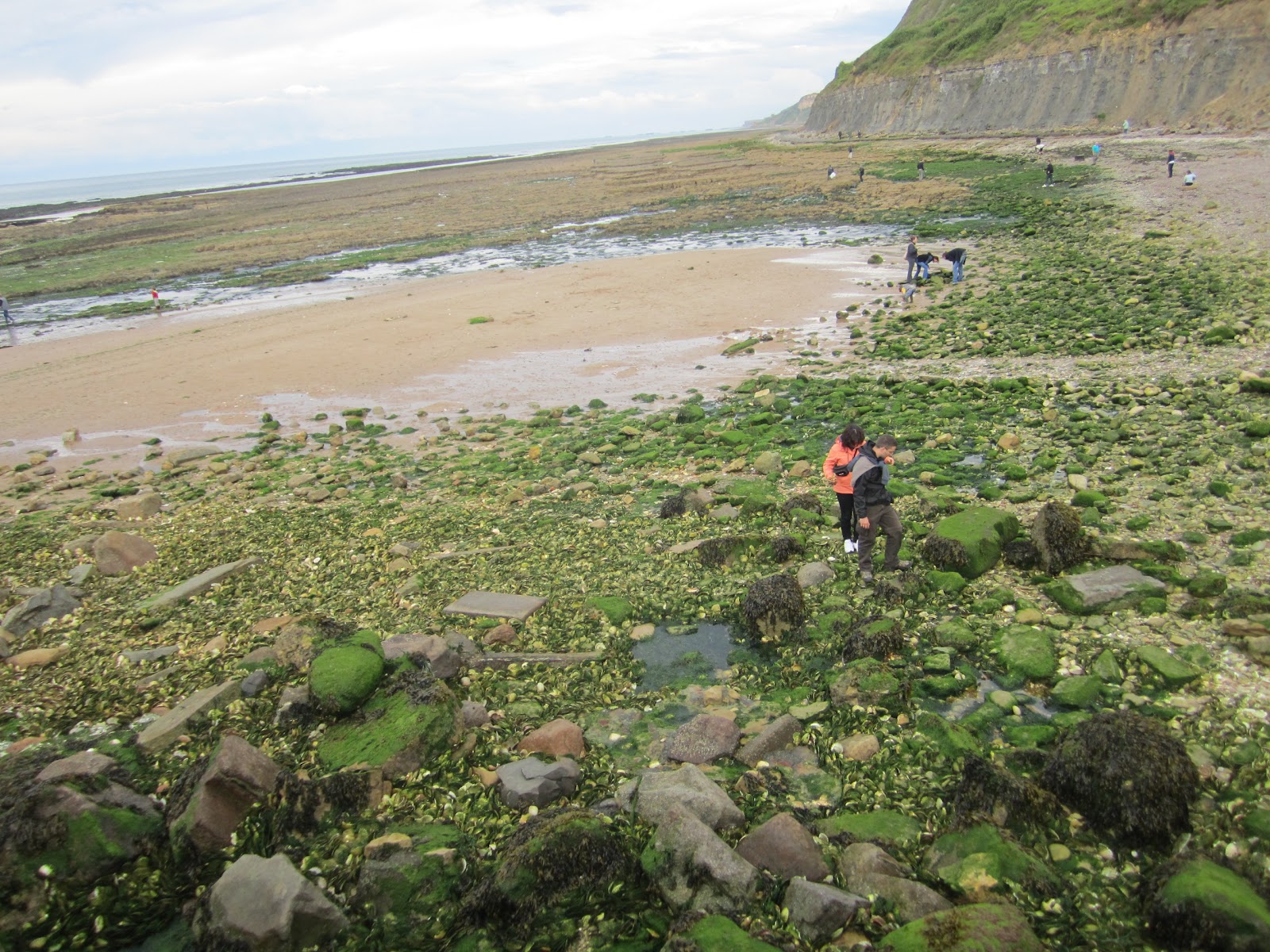
The beach area was full of mussel-covered rocks, and 5 metre tall cliff wall followed the shoreline.  I believe this was part of the Atlantic Wall built by the Germans in WW2 as a fortification to prevent British attacks.  It was not a typical beach by any Australian standards, but it was interesting and beautiful in a different way.

Port en Bessin beach
Looking back at the coastline from the pier
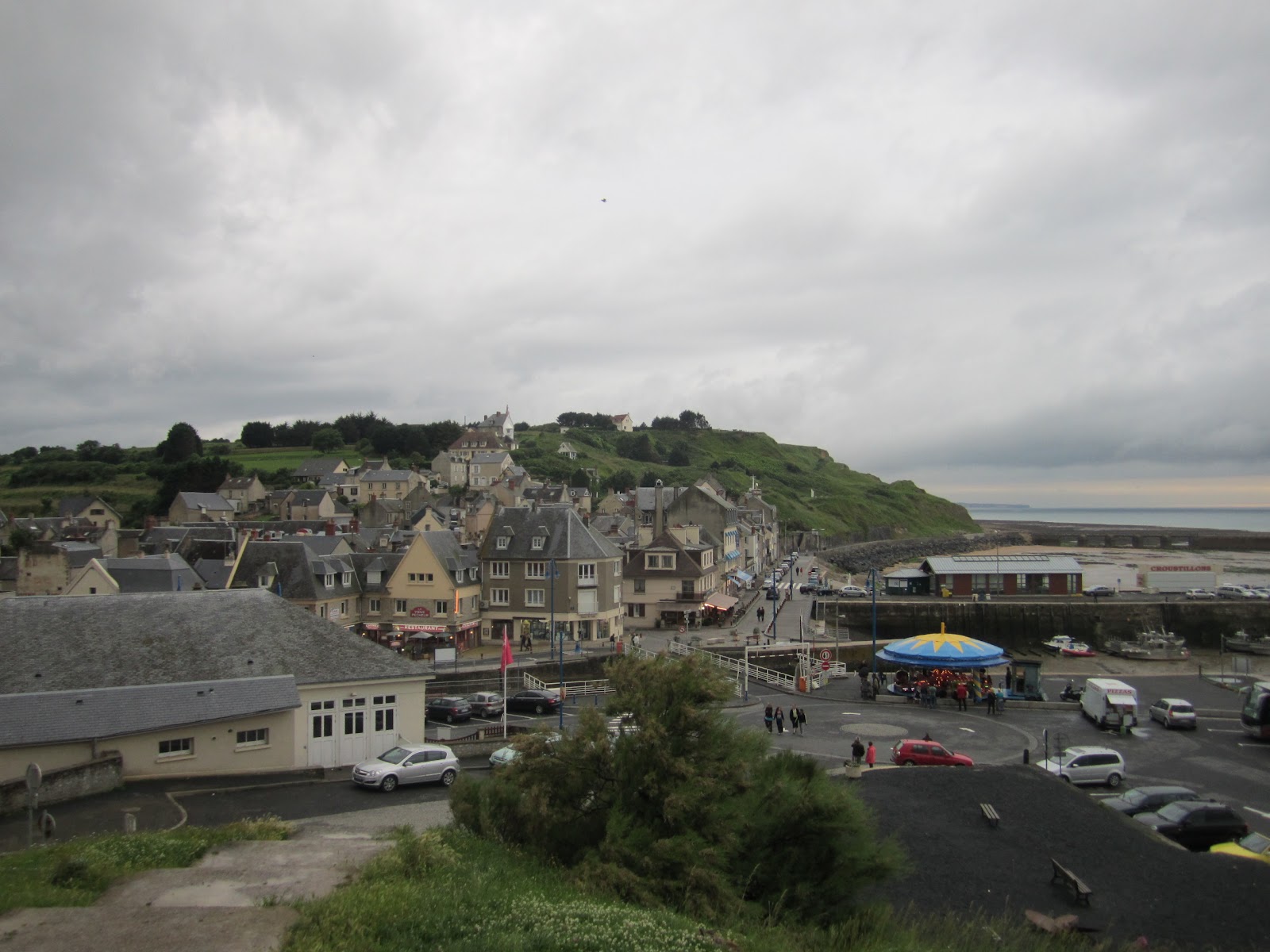
Dock area from the top of the hill


Thursday, July 19, 2012

Summer Holiday Part 4

The next day was the last of our WW1 visits.  We drove from Gouy-sous-Bellonne to Bullecourt, where a small Australian memorial holds a statue of a Digger, with the touching story of how the sculptor based the Digger on his father who served and died in the war.  From here we went to the Thiepval visitor centre and memorial for the missing.  The memorial was massive and poignant, holding the names of over 70,000 commonwealth soldiers who resting places are unknown.  The visitor centre had a very detailed and interesting display on the main battles that occurred in the area, and gave personal stories of a few of the families affected heavily by the war.
Digger Statue at Bullecourt
Thiepval Memorial to the Missing
Australian monument at the Poziers Windmill
From then on we visited some important Austrlian war sites, including the windmill site and the 1st Australian Division memorial at Poziers, and the Australian National Memorial and the Franco-Australian Museum at Villers-Brettoneux.  The national memorial was a highlight for the trip because, in addition to being one of the most peaceful and sites, both Sam and Margot have relatives who are commemorated here.  It was special to find these names and place a poppy to remember them.
Australian National Monument
The town of Villers-Bretonneux had a very distinct presence.  Victoria School, home to the museum, is funded and sponsored by Australian schools, and there was a sign above the entrance to one of the buildings stating in large green and gold letters, 'Do Not Forget Australia.' A number of the streets were named after Australian cities, and we went to a little cafe called Melbourne (but the food was bad and expensive so we left without eating there).
Victoria School at Villers-Bretonneux
We stopped at Peronne for a late lunch, only to find that all the restaurants and cafes stopped lunch service at 2:30, so we shamefully resigned ourselves to McDonalds (yes, the Big Mac is called the Le Big Mac. Hilarious.).  We finished the day with a lazy afternoon, resting and recharging during our last night at Gouy-sous-Bollonne before the next phase of our holiday.


http://www.ww1battlefields.co.uk/others/arras2.html
http://www.ww1battlefields.co.uk/somme/thiepval.html
http://www.ww1battlefields.co.uk/somme/pozieres.html
http://www.ww1westernfront.gov.au/villers-bretonneux/town-of-villers-bretonneux.html

Wednesday, July 18, 2012

Summer Holiday Part 3

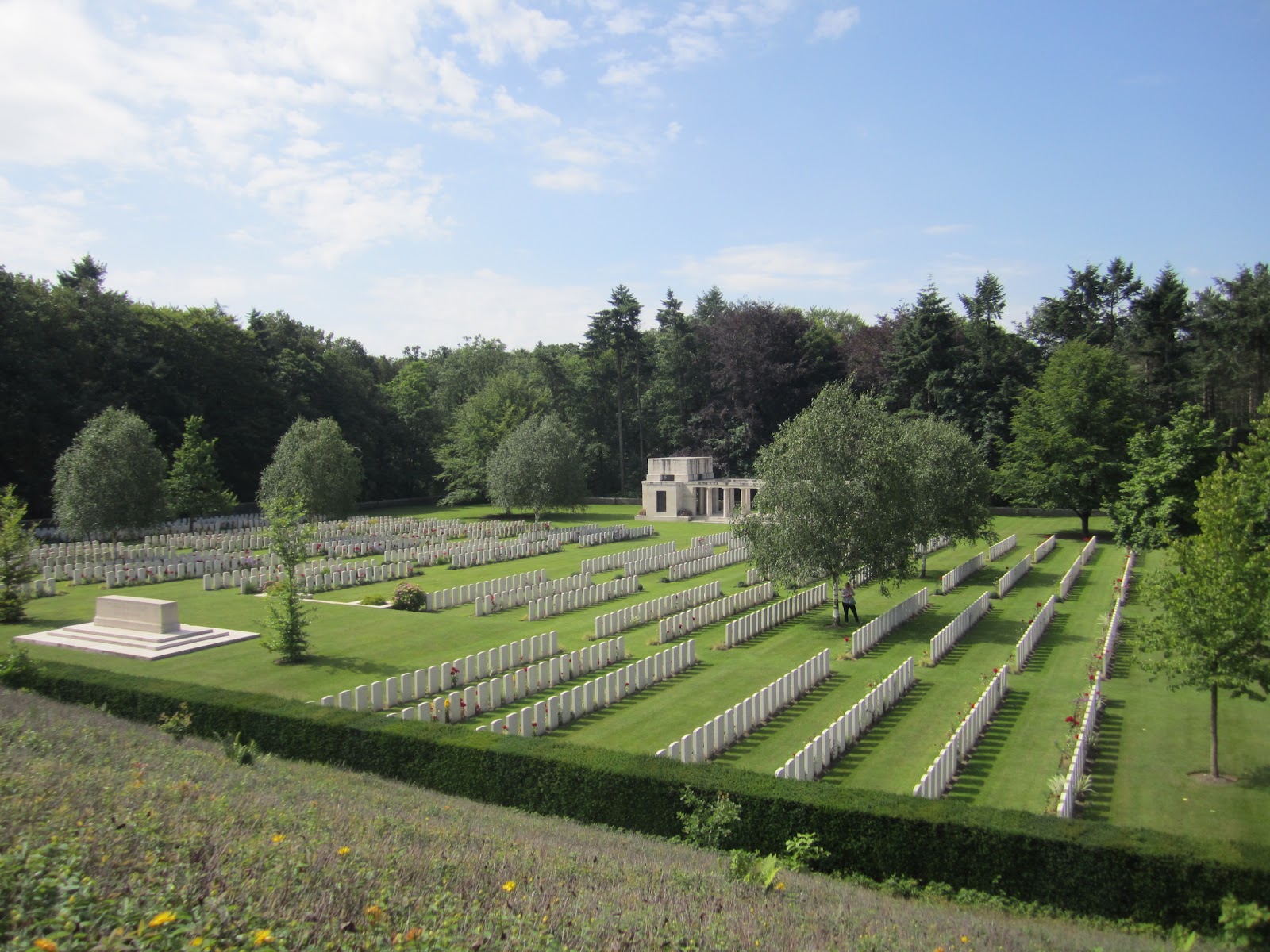
During the next two days we visited many WW1 cemeteries and museums in the area, many dedicated to the Australian soldiers who traveled to the other side of the world.  In the Fromelles area, we visited the Pheasant Wood cemetery which is quite new and has only been finished in the last 2 years.  The pristine headstones lined up in the beautifully manicured garden are a great tribute to the care put into these memorials by the CWGC, and while nothing can make up for the lives and loved ones lost in the war, it must make the families of soldiers proud to know that their sacrifices are still greatly respected and appreciated.
Pheasant Wood
An Australian soldier's grave at Pheasant Wood
The nearby VC Corner cemetery is dedicated to unknown soldiers, and has no gravestones but instead a special type of rose rose cultivated for the war memorial, and a wall of the names of soldiers whose final resting places are unknown.  Interestingly, a tour guide there was telling his group about how a number of the soldiers have been discovered since their names were put on this wall, and are now commemorated elsewhere.  However due to the decision that a soldier will only have his name on a single war memorial on the Western front, the government is planning to rip down the plaques and put up new ones with the updated lists.
VC Corner Australian Cemetery
On our way back home from Fromelles we were planning to drive through a town called Loos.  We entered it into the GPS and drove off happily, not noticing that we were headed in the wrong direction towards another place called Loos on the border of Lille.  We had being doing our best to avoid cities while driving the rental car, and we all got a bit of a shock when we saw Lille on the street signs.  Fortunately we made it out safely and updated the GPS to take us to Vimy, where we stopped at a little park and ate lunch in the boot of the car because it was raining.

We had been told that the Canadian memorial at Vimy was worth seeing, but the lack of signage was so frustrating that we almost gave up.  We were about to drive off when we saw a guy standing out the front of his house so we stopped and asked him for directions.  He was so kind to us- he jumped in his car and told us to follow him which we did- and he led us right up to the gate of the memorial complex.  What a friendly fellow!

Trenches at Vimy Canadian Memorial
The memorial park was massive- it had multiple cemeteries, a visitor centre, a restored trench system in a heavily cratered field, and the biggest memorial statue we saw on our entire trip. It was almost too big- where all the other memorials were mostly reserved and respectful, this looked like something from a scene in the Halo xbox game.  It was quite impressive.  The complex was also full of woods that were roped off with signs warning about live explosives still being buried- and flocks of sheep happily wandering through these roped off areas.  We all had our cameras ready on video mode to capture the moment when a sheep was exploded by a landmine, but unfortunately for us this did not happen.

The Canadian memorial
The memorial from up close
As we drove home, we took a wrong turn near the Arras city centre and it was like being transported back in time- the old town squares were surrounded by neat rows of beautiful old buildings that had managed to survive the war.  We explored the area with its old cathedral and town hall (including purchasing a 2.50 euro parking ticket which lasted us until lunch time the next day) before having dinner at a little pizza restaurant.  The pouring rain, burnt pizza, weak wine and uncooked bread did not dampen our spirits as it had been a great day.

Arras town sqaure
Battle-scared forest at Vimy

Useful links:


Tuesday, July 17, 2012

Summer Holiday Part 2

Day 2 was a 'big day'. We started at the Hill 62 area, where we visited the Canadian memorial and spent an hour at the Sanctuary Woods museum.  I wouldn't call this a museum, it was more just a collection of war memorabilia. There were rooms and rooms of war medals, shell casings, uniforms, pictures and photos but not a single word of explanation or description- interesting to look at, but without any information it was just 'stuff'.  Aside from the trenches, the most interesting thing was the boxes of candid black and white photos from the war, which showed the devastation and destruction in gruesome detail which was not captured by words or paintings.


Sanctuary Woods trenches, including The Cat


The trenches outside were quite moving to see, as they have not been beautified in any way. It was wet and muddy, much closer to what it probably would have been like than some of the other trenches we saw on our tour- however I'm sure this was more due to lack of care than to any particular effort made by the owner to maintain its realism.  There was some stray cats that followed us wherever we went through the exhibition.

The first major cemetery we visited was the Australian and New Zealand memorial at Polygon Wood, which had a memorial to the Australian 5th Division on top of a hill overlooking the cemetery. From here we visited Tyne Cot which is the largest Commonwealth cemetery on the Western Front.  The visitor centre was modern yet respectful and described a more personal side of some of soldiers who died and their families.  As we approached, the names and details of fallen soldiers were read out from speakers along the path in a further attempt to drive home that along with the international and historical impact of the war, it also caused much individual and personal heartache.  Amongst the rows of clean, white headstones and bright red roses laid an original German bunker, a further reminder of the activities which happened right on this site.


Australian Memorial at Polygon Wood
Looking out over the cemetery from the top of the hill
The memorial to the 5th Australian Division

Tyne Cot cemetery
We had a nice lunch of bread and cheese at a park outside the Passendale Memorial 1917 Museum at Zonnebeke, which we spent an hour wandering through that afternoon.  This exhibition was full of interesting an informative displays from the war, including the more practical and mundane parts of life at war like food, medicine and clothing.  It also highlighted some of the lesser known phases of the war, such as the tunneling activities, chemical warfare (the first use of poison gas  is considered to have happened at the 2nd battle of Ieper) and the use and development of flamethrowers.  There was also a reconstruction of the underground bunker built beneath the local church.

One of the reenactments in the Passendale museum
After an hour drive across the border into France, we arrived at our hotel in Gouy-sous-Bellonne, a cute little darm-house B&B called Ferme de la Sensee.  The owners were very nice and, due to our lack of French, helped us booking at a local restaurant.  It made our day when the lady was telling us about her two 'poopies'- the beautiful puppy dogs that lived on the farm with them.

The 'poopies'
Hotel Ferme de la Sensee
Our big shared room
The restaurant, L'Estaminet Gourmand, was genuine and tasty and our first experience of trying to decipher the French menu, receiving unlimited bread and ordering wine by the jug.  Our waiter, a young guy called Clement, nervously asked us where we were from and after finding out we were from Sydney, he was excited to tell us about his upcoming visit to Sydney to attend an English and hospitality course.  He was interested to learn that Margot was a 'food professor' (a high school food studies teacher) and we spent some time putting together a list of places for him to visit while in sunny Australia.


Delicious French dinner at L'Estaminet Gourmand


Useful links


Monday, July 16, 2012

Summer Holiday Part 1

Our beautiful friends Margot and Sedelle came from Sydney to visit us and spend 2 weeks travelling around France.  We spent the first few days doing touristy things in our home town, including some that we've not done before, like cycling a peddle boat through the canals and taking a horse and carriage from Dam Square through the Negenstraatjes.  It would have been super embarrassing if someone from work had seen me, but fortunately I just looked like another tourist.

Our little travelling family
After picking up our rental car, a nice spacious Opel Zafira which we named Zafira, it was off to Ieper (Ypres) in the south of Belgium. As always, it takes a bit of time to adjust to driving on the opposite side of the road, so we employed all sorts of tricks to make things easier such as blue-tacking a sign to the dash which indicated the difference between left and right turns and the repetition of the phrase 'lefty loosy, right tighty' at every intersection (which, over 1500km, is quite a few intersections, and every one was concluded with the driver happily exclaiming '...nailed it!').  We also had our secret keyword 'banana' which is used to remind the driver to not drive off the side of the road and crash into stuff.  From this arose lots of interesting conversations, such as 'wow, look at that BANANA!', and 'it's pretty cloudy outside, it looks like it might BANANA!'.

Lunch at Ijzendijke- first of many food photos
Our first stop was at a charming little town in the south of Holland called Ijzendijke, which we stopped at to see the windmill that we had spotted from a distance. We had lunch at a cute little cafe while listening to the sound of the church bells, before visiting the windmill.  We were lucky enough to be able to go inside the windmill, because the owner had opened it up to show to a fellow windmill owner who was visiting from the other side of the country.  This man was nice enough to give us a little tour and description of the how this still working mill produces it's white gold.


We had an hour or so in Brugge which we mostly spent in a waffle shop, before the final leg of our first day's driving to Ieper.  As we drove past a rundown old shack, Kate (the GPS) proudly announced to us that we had reached our destination which gave us a bit of a shock.  Fortunately our hotel was the next building along, and it was quite a nice little almost B&B style place.  On the grounds of the hotel was the preserved remains of a small WW1 battlefield, complete with trenches, bunkers and a massive crater in the middle which was the result of the underground tunnel and mining divisions.  This was the first I had heard about this underground warfare, but it was quite a common theme throughout the exhibitions and museums that we visited on the WW1 western front.
Beautiful Brugge
Delicious Brugge

One of the main attractions in Ieper is the Menin Gate Last Post ceremony, which has run every night at 8:00pm sharp since WW1, except for a few days during WW2 when the town was captured by the Germans.  Despite the density of the crowd, the noisy old Scottish guy who would not stop talking and the rude guy who pushed into the middle of our group, it was a moving and atmospheric ceremony, and one could not help but get shivers as the last post echoed off the thousands of names engraved upon the walls.


Menin Gate
During the ceremony

After the ceremony we went searching for a grocery store to buy some dinner, but we were informed by a girl working in a shop that Ieper was 'too small to have any grocery shops' (what do they eat?) so we ate at a little pizza restaurant.

By the time we had finished it was 9pm, but being Europe in the summer it was still light so we went home via the Hill 60 memorial site which was a battle where the 1st Australian Tunneling Division created one of the largest explosions in history beneath the German bunkers.  Now, there is the remains of one bunker surrounded by grassy hills and craters.  Also, we saw a hedgehog.