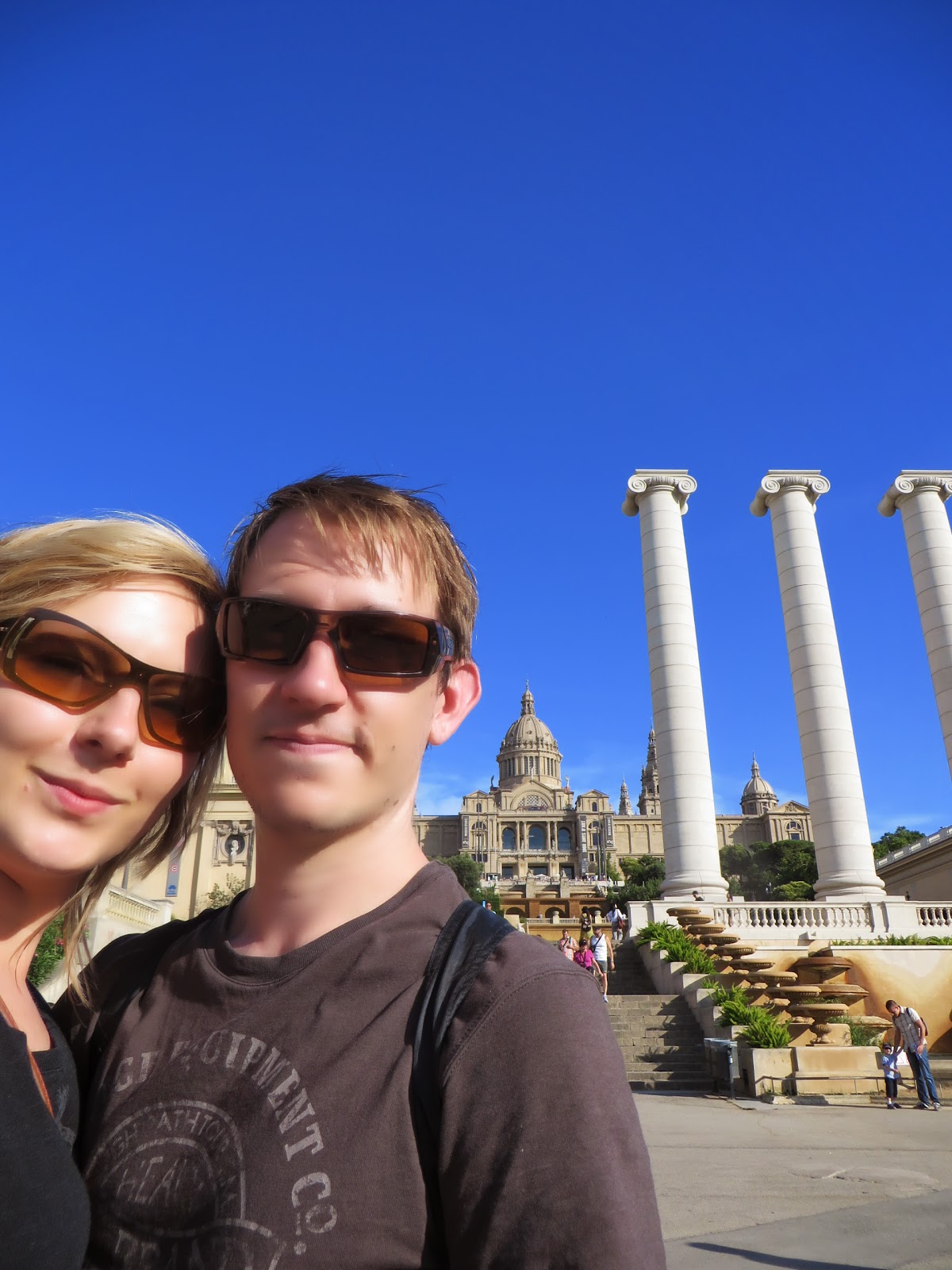
The Netherlands really brightens up in summer. People sit out on the sidewalk in front of their houses enjoying a glass of wine, fill the park with smoke from Albert Heijn disposable barbecues, and head to the seaside in droves. As well as these, we also took apart in another typical Dutch summer tradition- a vacation to somewhere much warmer and sunnier. For us, this was a long weekend away in Barcelona.
We arrived on Thursday morning, meeting up with our friends who were on holiday from back in Australia. We went for a bit of a wander through the streets, having a quick look at the Barcelona cathedral, checking out some street markets, and admiring the incredible architecture. There was a real mix between the old, typical Western European buildings and the loud, curvy, colourful style unique to Barcelona. We learned a lot about this style when we visited Casa Batllo, designed by the architect Antoni Gaudi who is responsible for many of the most recognisable buildings in the city. It was easy to spend time in this beautiful building that was full of colours and angles inspired by the ocean.
Casa Batllo
The rooftop
In the afternoon we visited another Gaudi site- the Guell Park. This park had a great view over the sprawling city and out to the ocean. The park itself had a number of buildings in the Gaudi style, and a particularly nice square surrounded by a terrace made with the colourful ceramic mosaics for which he famous.
Main square at Guell Park
Friday was again Gaudi inspired, starting with a visit to the La Sagrada Familia- the cathedral of the Sacred Family. Over the last 18 months we have been to countless churches, cathedrals, basilicas, monasteries etc. throughout Europe but this was so different to anything else we have seen. To start with, it is massively tall, which you don't really get a sense of until standing at one of the incredibly decorated facades. These facades were designed with different styles, so each entrance to the building had a different feel. Inside, the large multi-coloured stained glass windows were designed to give each area of the building a different mood- blue and green glass to give a cooler feel, reds and oranges to give a warmer, brighter feel. The tall central pillars were topped with branch like supports to make it seem as though you are standing under the canopy of an alien rainforest.
Front of the Segrada Familia, still under construction
That night we went to a jazz concert hosted on the rooftop of another Gaudi masterpiece, Casa Mila. The music was secondary to the the surreal architecture on the rooftop that was made spectacular by the flood lights reflecting off the white chimney tops.
Casa Mila
Jazz on the rooftop at Casa Mila
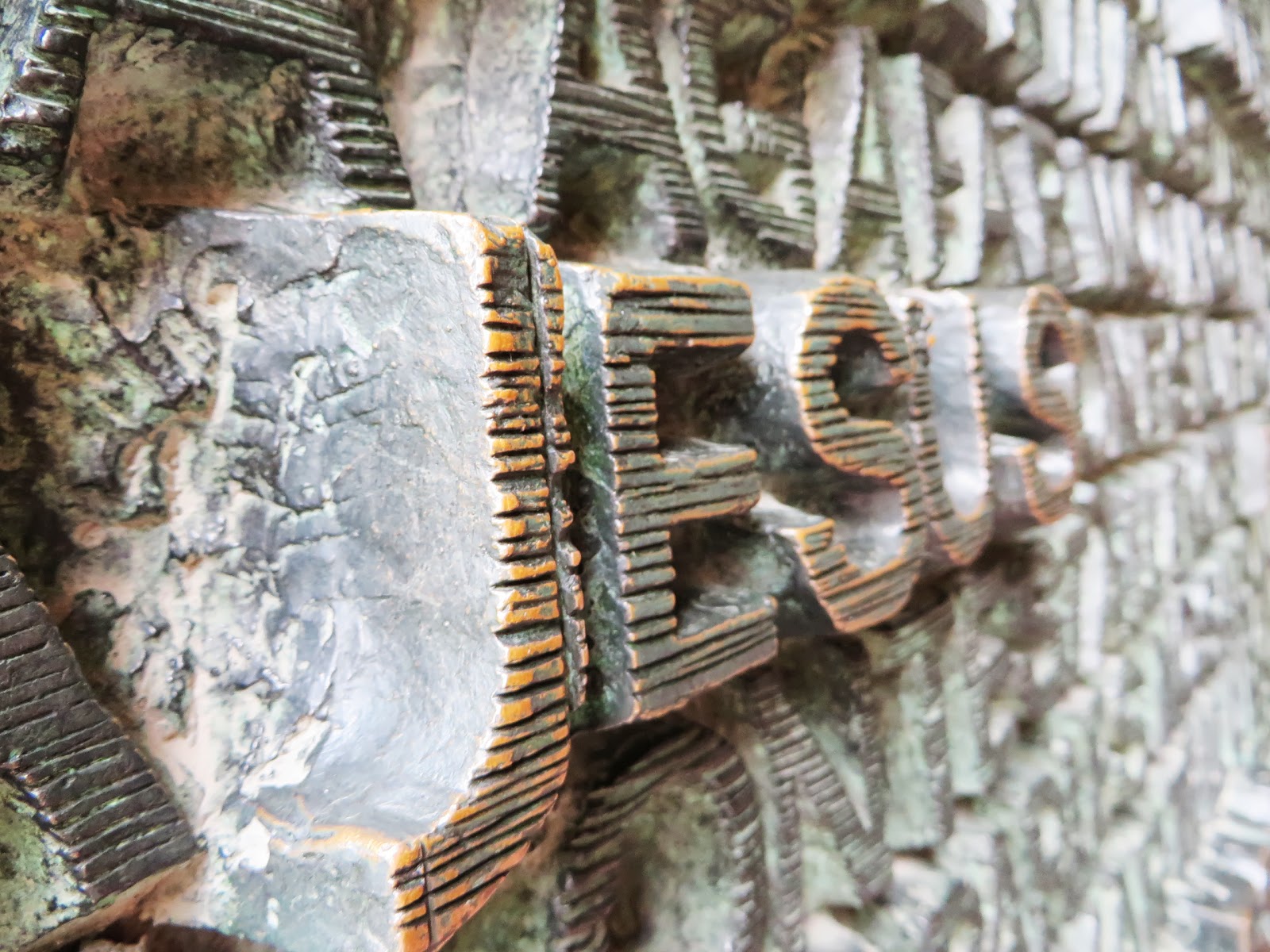
The architecture in the city was pretty incredible, but it is on a completely different scale compared to some of the beauty found in nature, as we found out the next day on our trip to Montserrat. This rocky mountain formation, which gets its name from its comparison to the serrated edge of a knife, houses an abbey built into the top of the mountain called Santa Maria de Montserrat. The funicular provides access from the local train station, which is about an hour from Barcelona. There are a few different walking tracks on the mountain, and after a nice lunch looking out over the valley we took an hour hike out to a chapel on the face of the mountain. Along the walk there were statues and icons depicting the life, death and resurrection of Jesus.
Funicular to the top of Montserrat
Serrated mountains which give the name Montserrat
On Sunday we were by ourselves as Tom & Jo had left early for the long flight home. We had planned to spend the morning looking through the shops, only to find that Barcelona still keeps strong to the tradition of closing everything down on Sundays. We were walking aimlessly through some alleyways when we heard some music and cheering, and the narrow road opened up onto a square packed with people. In the centre was a tower of people balancing on top of each other, human pyramid style. We had stumbled upon a Castelling competition, a Catalan tradition where teams take turns to make towers. We stayed and watched for a while as the brown and green teams traded single person, 3 level towers and complex 5 and 6 level creations that required maybe 50 people, including the base of strong guys supporting everything from below. The most amazing thing was watching the little kids in crash helmets scrambling up the outside of the almost finished tower before reaching the top where they bravely raise one hand to signify that the tower is complete.
Barcelona was a great city for food and drink. Although tapas and sangria are not typically Catalan, they are found at restaurants throughout the city. Quality varies but with a bit of research it is possible to find some really great food. We ate at tapas restaurants Tapeo and Sensi, the latter which was so hipster that you could barely see the Threadless designs on the waiter's t-shirt through his beard (he was nice though, and the food was really good). Others included a funky little Bohemian cafe, complete with pony-tailed, ear-ringed waiter storing his packet of smokes under the sleeve of his singlet, and a cool gin bar called the Rubi Bar with a wall of different home made gins, like cucumber or chocolate.
There is so much to do and see in this city, four days was nowhere near enough (although four days of the disgusting tap water was plenty). And of course, it was nice to be again in a place where shorts and a t-shirt is the most appropriate attire.
This quote from Working Effectively With Legacy Code by Michael C. Feathers is aimed at developers who are trying to work with and improve old, complex, bloated code bases. These monolithic systems are so big and tangled that addressing one small problem within it can raise a bunch of other issued. I have often seen developers stuck on a problem not because they could not think of a way to solve it, but because they could not find the perfect way to solve it. Perfection is an admirable goal, but rarely immediately achievable. Something that is always achievable though is the direction of perfection. Even if we can't make something the best, there must be a way to make it better. Eventually, after iterations of becoming better, it might become the best, or maybe it won't. But inactivity is one way to ensure that the situation never improves.
Nice weather is rare here so we had to take advantage of it this weekend with another long distance cycle, this time heading North from Amsterdam. With my mate Tom visiting from Australia, we went on a 60km cycle that started with catching the ferry from Central Station to the North side of Het Ij, before cycling along the Western bank of the Ijmeer to Marken. It was beautiful conditions for cycling, warm but not too hot with a cool breeze at our backs.
Sea-side village atop the dijk
We stopped for morning tea at a little cove at the base of the dijk
Marken used to be an island but has recently had a road built joining it to the mainland. From the north of the island though, we caught the ferry across to Volendam. We stopped in this cute little fishing village-turned-tourist destination for a lunch of fresh herring broodje and kibbling which we ate sitting on the dock.
Marken
Approaching Volendam on the ferry
Volendam
Haring Broodje for lunch
The cycle home was not quite as comfortable as the way there, with the refreshing tail wind turning into a blowing head wind which made each turn of the peddle feel like walking through quicksand. The signs telling the distance back to Central Station seemed to be mocking us, as we would cycle for what felt like 10km to find out that we had only gone one. Eventually though we made it back to the station, where we caught the ferry back to Amsterdam and the shelter of the buildings which made final 2km back home much easier.
In the spirit of seeing and experiencing more of the area where we live, we decided to spend a weekend exploring in the most Dutch way possible- going for a cycle. For quite some time we have been meaning to do a day cycling trip along the Amstel river, and finally we had a free, sunny weekend. So, armed with a picnic lunch and a Lonely Planet Amsterdam guide, we cycled into the morning.
From our house, we started with 3km cycle to the Amstelpark, where we cycled next to the river for about 7km until we reached the small town of Ouderkerk aan de Amstel. There were many other cyclists, rowers and joggers out enjoying the sun. It was pretty incredible that just a few minutes cycle from the bustling city there was peace and quiet among kilometres of green farmland, and even more strange to see cows and sheep with tall skyscrapers in the background.
Just past the town we stopped off to rest our legs and for a quick snack on a small jetty over the river. Despite the heat from the sun (one of the first really warm days of the entire year!) it was still quite windy- fortunately the wind was at our backs so cycling was easy.
By this time we were on the edge of the Rondehoep, a large polder (low-lying area of land surrounded by dykes) that covers all the way from Ouderkerk aan de Amstel down to the border of the Utrecht province. We cycled around the whole polder, a distance of around 15km, with a quick stop for lunch half way around. Cycling along the dyke, it was striking to see the water level on one side of the dyke being quite a bit higher than the land on the other side- just a foot or two rise of the water would result in the farmland, and in many places the front yards of family houses, being flooded.
At one point we crossed over the river on a small wooden hand operated bridge. As we were cycling away, a small boat was going past but was blocked by the bridge. We watched as a guy climbed out of the boat onto the bank, unlatched some clips that were keeping the bridge secured and then pulled a rope which lifted the bridge enough for the boat to motor through.
As we cycled north towards home on the west side of the polder, the wind was now making it difficult for us. We eventually made it back to Ouderkerk, where we stopped for a coffee and some cake at a little cafe right on the river with a nice view of the church from which the town gets its name.
The winter has been long, and it was a great relief to finally get some warm weather. It's easy to forget that just a few months ago these same canals would have been frozen over, rather than reflecting sun from gentle ripples.
One of the great things about summer in Europe is the festivals, such as the Brussels Jazz festival. We jumped on the train after work on Friday afternoon and we were in Brussels by 8pm, ready to enjoy some music. All through the city there were pubs, cafes and squares with live music. Ideally it would have been nice to sit out in a square under the warm sun enjoying a cold beer- unfortunately the weather had other ideas and any outdoor music viewing was done with warm jackets and hot drinks. Nevertheless, across the weekend we enjoyed quite a few different bands.
Main stage in the Grote Markt
Outdoor stage at Sint Katelijneplein
Jazz trio in a cozy little cafe
We also took in a few different sights while in Brussels, including the Musical Instrument Museum and the Museum of Original Figurines which highlighted Belgium's rich contribution to cartoons and comics which includes the Smurfs, Tintin and Asterix.
Theremin
Brass inventions by Adolf Sax
Smurfs at the Museum of Original Figurines
Asterix and Obelix
Tintin
Another well known Belgian product is the beer. We tried a number of styles of beer unique to the country, including the tripel-style Delirium Tremens at the Delirium Cafe (named the best beer in the world in a survey a few years ago) and a lambic beer at cafe Lambic Moeder, a type of beer produced using the old-world technique of spontaneous fermentation caused by wild yeasts and bacteria.
Delirium
Lambic beer with a side of barley grain
Despite the gloomy weather, the city was bustling and had a great (grown up) party atmosphere, making for an enjoyable weekend away.